Root to Crown: Let’s Sit
Meditation + Breathwork ~ Turning Inward

The first two days of every phase ask us to move. The third asks us to sit. So, the body becomes still. While the mind often does not.
Have you noticed that? Or perhaps the better question is: have you ever noticed the mind becoming still simply because you asked it to?
We notice a thought, follow it, remember something, plan something, and then realize we have been somewhere else entirely the whole time. At that point, it is really easy to take that as evidence that we are bad at meditation.
I think that conclusion begins with a misunderstanding. We use one English word "meditation" for both the practice we choose and the state that may arise from it. Once we separate those two things, the whole experience becomes easier to understand, and much easier to meet without self-blame.
The distinction that changes the practice
In Sanskrit, the words dharana, dhyana, and samadhi help us describe different parts of what English compresses into meditation.
• Dharana is the intentional work of placing and holding attention: on the breath, a sound, a mantra, a sensation, a point, or another chosen object.
• Dhyana describes a more continuous meditative flow, when attention becomes less interrupted and less effortful.
• Samadhi points toward deeper absorption. The traditions describe it with more nuance than one English sentence can carry, so I will hold the term carefully rather than turn it into a promise.
This is a helpful way of understanding the sequence, not a complete translation of everything these terms have meant across time. But I believe it gives us one sentence worth remembering:
We can choose the practice. We cannot require the state (or make it happen).
Meaning, we can sit down. We can create the conditions. We can practice dharana by placing attention somewhere and returning when it moves. While dhyana is not something we force through effort. It is simply a quality of attention that may begin to arise through the practice.
I want to also point out that in meditation the work is noticing that attention has moved and learning what to do next. A wandering mind does not mean that nothing happened. Noticing the movement is already part of the work. Then if that work leads to producing a perfectly silent mind, how lucky we are. And if not, it is still meditation.
Where meditation sits within yoga
Most of what we call yoga in modern studios is asana, the physical practice. But asana belongs to a much larger tradition.
Within the broader yoga tradition, several paths are commonly described, including bhakti yoga, the path of devotion; karma yoga, the path of selfless action; jnana yoga, the path of knowledge and inquiry; and Raja Yoga, the more systematic path of working with conduct, body, breath, senses, and mind.
Patanjali's Yoga Sutras lay out the eight-limbed framework associated with this Raja Yoga path. The Sanskrit word ashtanga means eight-limbed: ashta, eight, and anga, limb. This classical use of the word should not be confused with the modern, physically demanding Ashtanga Vinyasa style taught in many studios.
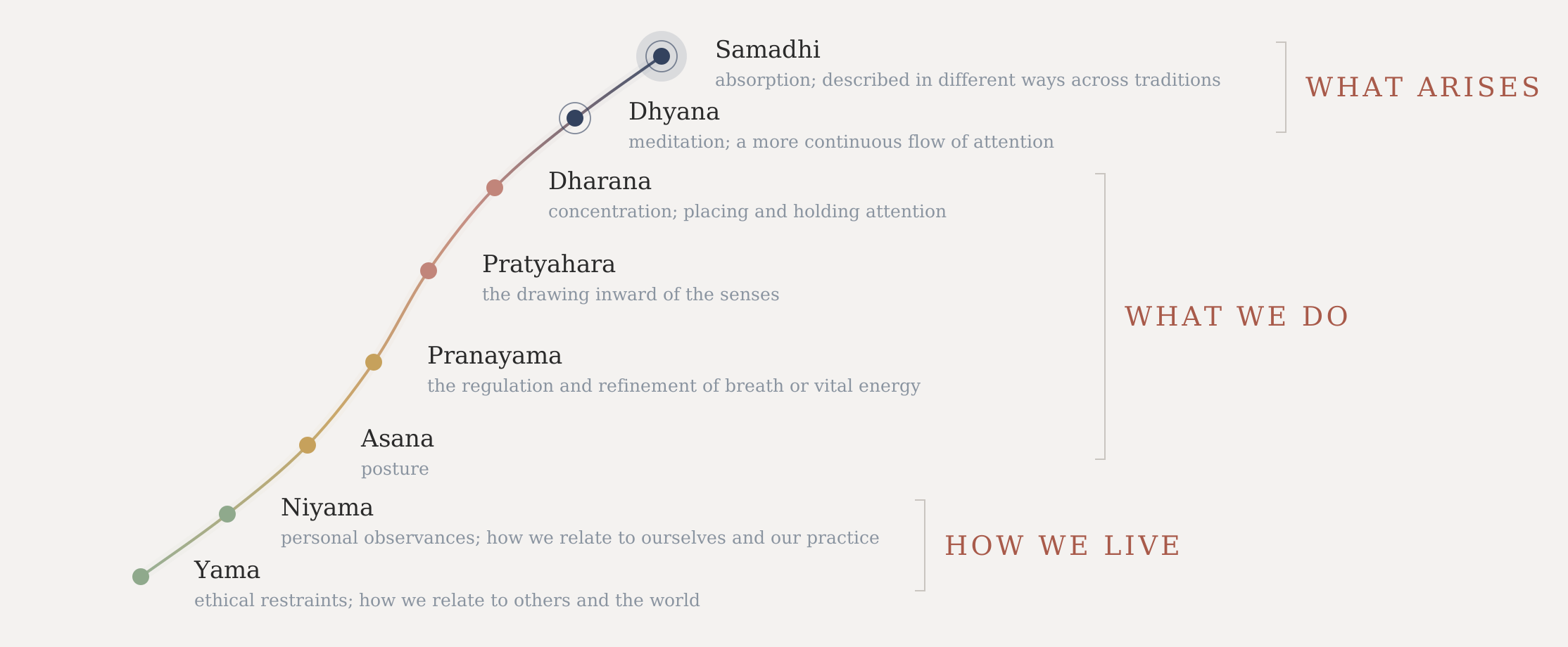
For this journey, the important point is simple. Pranayama, pratyahara, dharana, dhyana, and samadhi are named separately because they are related but distinct practices and states. That distinction shapes every third day of Root to Crown.
Breathwork is related to meditation, but it is not meditation
Pranayama is its own limb of yoga. It is not simply meditation performed with breathing, and it is not only a warm-up. Different breathing practices can steady, energize, cool, focus, or soften us. Not every breath practice is designed to make us sleepy or calm.
In this series, the breath will often create a threshold between movement and sitting. The body has been active. Attention may still be moving outward. Intentional breathing gives us a simpler place to begin. Then, in many of the practices, there will be a point at which we stop directing the breath and begin observing more openly.
Breathwork asks us to relate intentionally to breathing. Meditation asks us to relate intentionally to attention and experience. They overlap, but they do different work.
Mindfulness is important, but it is not the whole of meditation
Mindfulness is now used so widely that it can sound like another word for meditation itself. It is better understood as one important family within a much larger contemplative field. Mindfulness practices often cultivate present-moment awareness and a less automatic relationship to thoughts, sensations, and emotions. They are deeply valuable, and they will appear throughout this journey.
But meditation can also involve sustained concentration, sound and mantra, visualization, devotion, compassion, sensory withdrawal, self-inquiry, open awareness, or contemplation of a question or teaching. Mindfulness is not simply meditation with the spirituality removed, and it is not the single method from which every other practice is a variation.
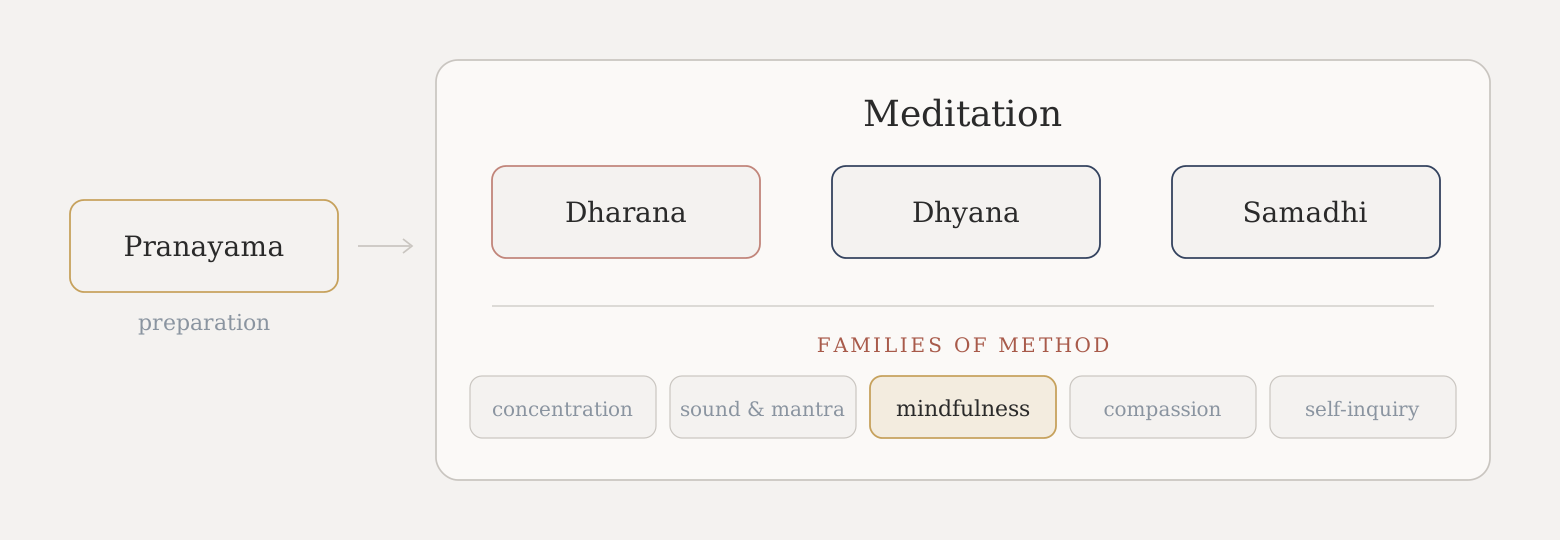
There is no need to choose one of these as the single correct form. They train different capacities and arise from different traditions.
Why there is no single meditation
There are many meditation techniques because attention can be trained in many ways. There are also many kinds of minds, and many states of the same mind. A method that feels stabilizing one day may feel inaccessible on another. A practice that helps one person settle may leave another person restless, flooded, or simply bored.
One useful way to organize the landscape is through two broad axes: focused attention versus open awareness, and grounding versus inquiry.
• Focused attention narrows the field around one object: a breath, sound, flame, mantra, image, or point.
• Open awareness receives a wider field of thoughts, sensations, sounds, and experience without selecting only one.
• Grounding brings attention toward something immediate and concrete: contact, weight, temperature, sound, or the feeling of the body being supported.
• Inquiry gives attention something to investigate: a question, sensation, pattern, or aspect of experience to follow carefully.
These are not fixed personality types. The answer may change with the day, the nervous system, the setting, and the reason we came to practice. But the following questions can help us begin:
• Does your attention settle more easily when it has one clear object, or when it is allowed to notice a wider field?
• Does direct instruction help or does your mind engage more naturally when it has something to investigate?
• Do you need more contact with the present through the body and senses, or more space to observe what is already moving through you?
• Is your mind a place you want to explore right now or is being inside it painful enough that you first need a concrete anchor outside the thought stream?
That last question matters. Open awareness is not automatically the most advanced or most honest practice. Sometimes grounding is the kinder and more appropriate place to begin.
When a method does not fit, it does not necessarily mean meditation is not for you. It may mean that the method, the timing, the length, the level of activation, or the way it was introduced was not right for you in that moment.
Across the seven phases, we will work with several broad families of practice:
Grounding
Using the body, contact, and breath to establish steadiness
Sensory awareness
Listening, feeling, and noticing more carefully
Concentration
Gathering attention around one point, sound, image, or mantra
Steadying
Remaining present when discomfort, resistance, or impulse appears
Open awareness
Allowing experience to arise without immediately narrowing around one part of it
Compassion and sound
Working with warmth, relationship, resonance, gratitude, or chanting
Inquiry
Examining the sense of self, the observer, and the assumptions beneath experience
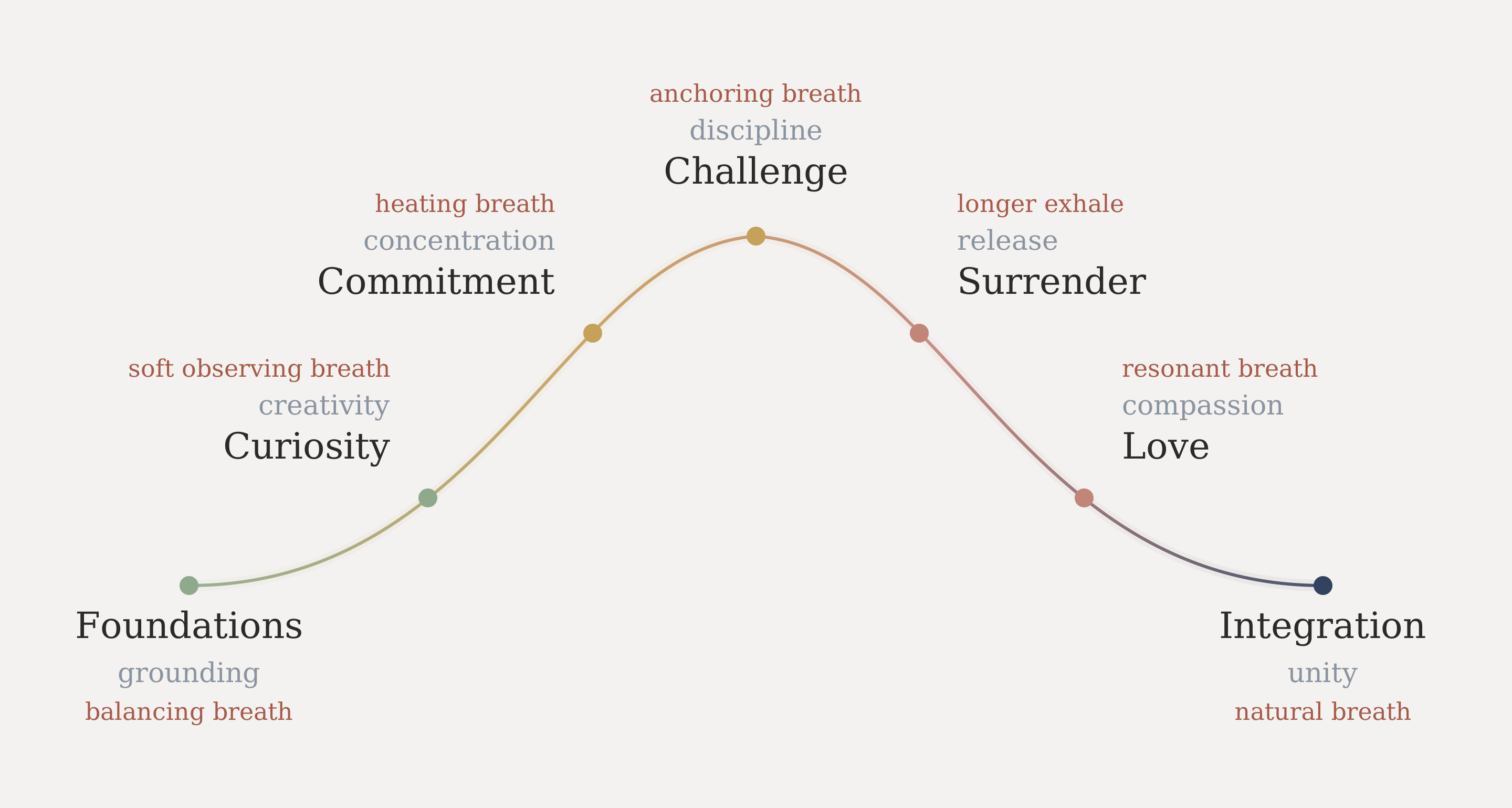
The goal of the journey is not to declare one method superior. It is to let you experience enough variety to begin recognizing what different forms of practice actually do.
Why practice at all?
There are three lenses through which I want to approach that question in this series.
The traditional lens
The classical traditions give meditation a much larger purpose than relaxation. Across Indian philosophical systems, that horizon is often described as liberation - moksha in broad usage, and kaivalya within Patanjali's framework. The traditions do not all agree on the nature of the self, consciousness, reality, or what is ultimately being liberated, and I do not want to flatten those differences.
You also do not need to adopt a complete metaphysical system before you are allowed to practice. I hold these teachings with respect and humility. They tell us what the practices were originally reaching toward, even when we are not ready to make every belief our own.
The practical lens
The practical lens begins closer to daily life. Most of the time, we do not experience a thought simply as a thought. We experience it as truth, instruction, danger, identity, or prediction. We do not always notice an emotion and then choose a response. Often, we are already responding before we understand what happened.
A plan changes without explanation. That is one incomplete data point. The mind can build an entire model around it: I am not valued. Something is wrong. This always happens. Meditation does not erase the event or ask us to ignore what we feel. It helps us notice the distance between the data point and the story our mind built around it.
Meditation can create a little more room around that process. It does not ask us to withdraw from life, stop caring, or become untouched by what happens. It gives us a place to practice caring fully without being completely governed by every thought, urge, or outcome we want to control.
This is where meditation meets non-attachment. We still choose. We still act. We still love, prepare, hope, and make an effort. But we begin to see the difference between participating in life and trying to control all of it.
The physiological lens
At the physiological level, meditation and breathwork can influence arousal. The sympathetic branch of the autonomic nervous system supports mobilization and action. The parasympathetic branch supports rest, digestion, and restoration. Different practices may shift us in different directions, which is another reason that not every meditation should be treated as interchangeable.
Yogic traditions sometimes describe a parallel through Surya and Chandra, that is sun and moon, or activation and cooling. I find the correspondence useful as a teaching lens, but I would not present it as proof that the traditional and modern systems are identical. A resemblance can help us think. It is not the same thing as scientific confirmation.
How the three lenses meet
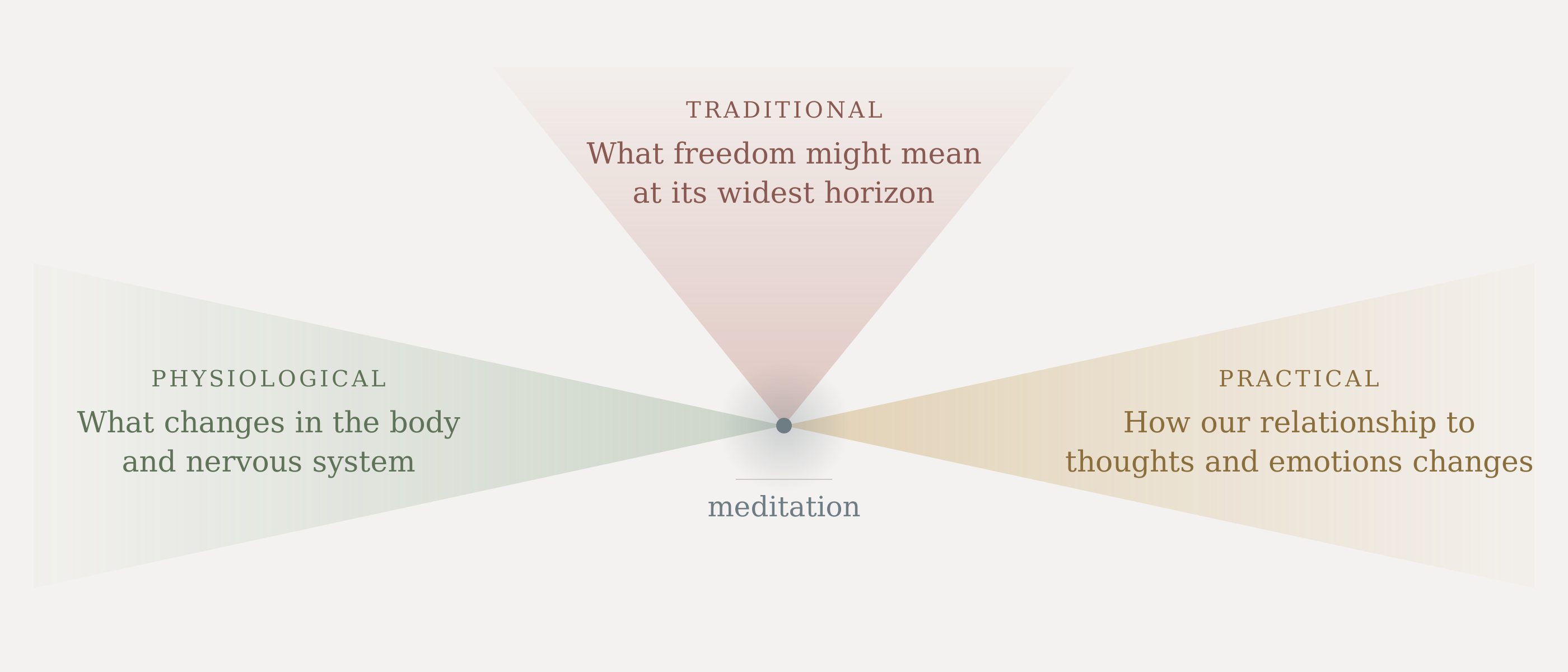
I think we can see these as three scales of the same inquiry from different perspectives.
• The physiological lens asks what changes in the body and nervous system.
• The practical lens asks how our relationship to thoughts, emotions, impulses, and uncertainty changes.
• The traditional lens asks what freedom might mean if that change were carried to its widest and deepest horizon.
We do not have to settle the largest metaphysical questions before working fully with the smaller ones. At the beginning, the most useful question may simply be whether a practice helps us meet our experience with a little more clarity, choice, and freedom. And that's enough to begin.
The shape of each third day
The details will change from phase to phase, but the general rhythm will remain familiar.
We will begin by settling in the body.
We will use a breath practice suited to the quality of the phase.
We will allow the senses to become quieter or more focused.
We will sit with a meditation technique.
Then we will leave a little time to rest and notice what remains.
Some practices will feel immediately accessible. Others may ask for more patience. You are not expected to master each method in one sitting. These are introductions, and some of them may become practices you return to long after the twenty-one days are over.
What we will practice
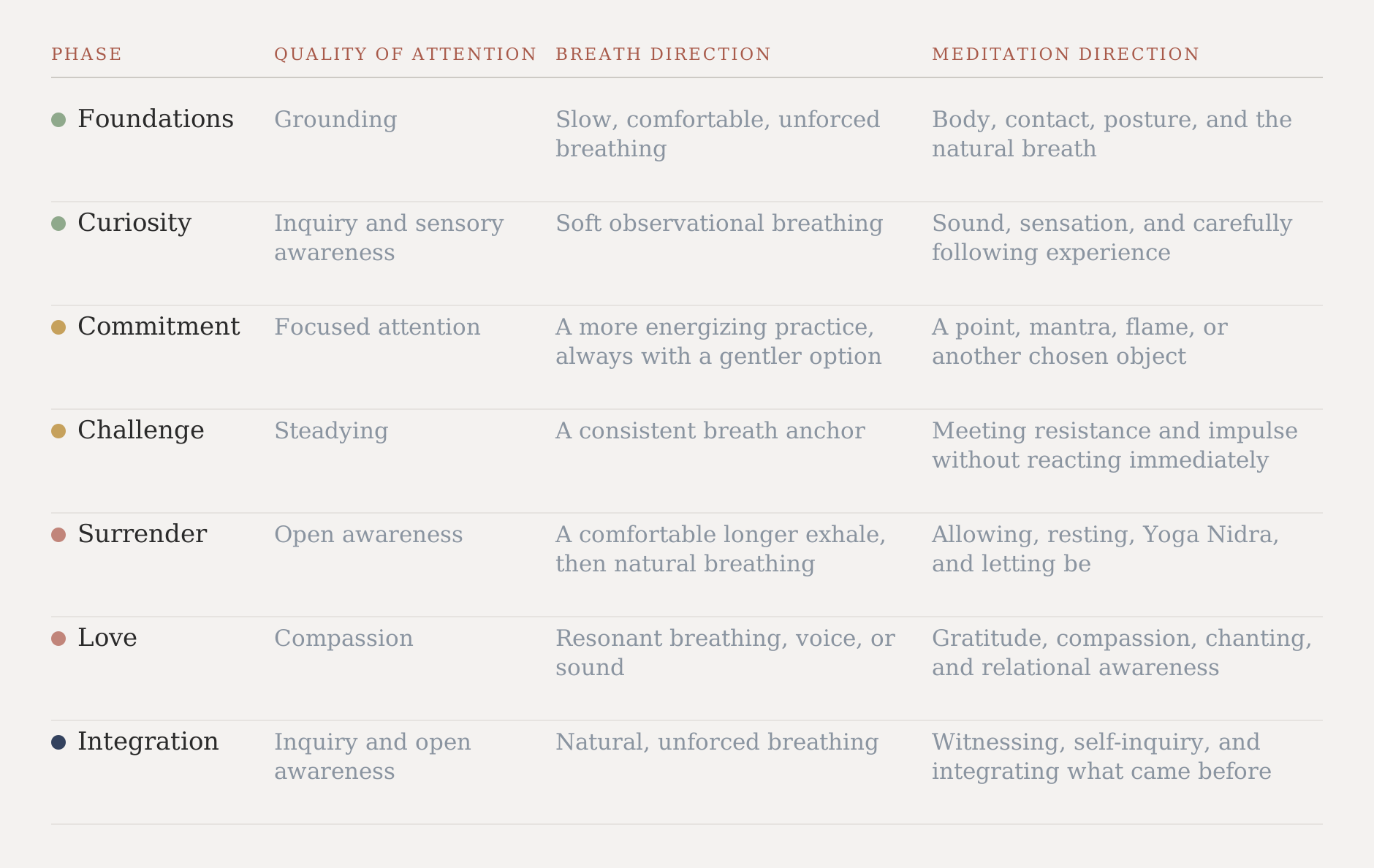
The table below offers a preview of how the seven phases will unfold. It shows the primary quality of attention, breath practice, and meditation we will explore in each phase.
The wider journey also draws on chakra symbolism for its energetic structure, but those associations are not meant to reduce every human experience to one center, one color, or one explanation.
Before We Sit
Before we begin, please know that:
You do not need to empty your mind. You do not need to sit perfectly still, and you do not need to hold yourself in one position after it becomes uncomfortable. You may close your eyes, keep them open, or let your gaze soften. There is no single way your body has to look for you to be meditating.
Some days your attention may settle easily. On others, the mind may continue moving from one thought to another. You may feel calm, restless, curious, resistant, or very little at all. None of these experiences determines whether the practice counted. Remember, we can choose the practice, and we cannot require the state.
Throughout the practice, the breath should never be forced. If a practice creates strain, dizziness, agitation, pain, or the feeling that you cannot breathe comfortably, we return to our natural breath. We may also choose a gentler variation, pause, or simply rest. Listening to what is happening is (a very big) part of the practice.
Across the seven phases, the techniques will change. We will ground through the body, explore the senses, gather our attention, meet resistance, soften, open, and inquire. But the invitation will remain the same: to notice what is here without demanding that it be different, and to begin again whenever the attention moves.
So, I invite you to come with the mind you have today, your current energy, and whatever is already present. And that is enough.
Sit whenever you are ready, wherever you are. And I’ll meet you there.
With love, always.